Planning guide · Stall formats
Shell scheme or custom stall: choose around your exhibition goal.
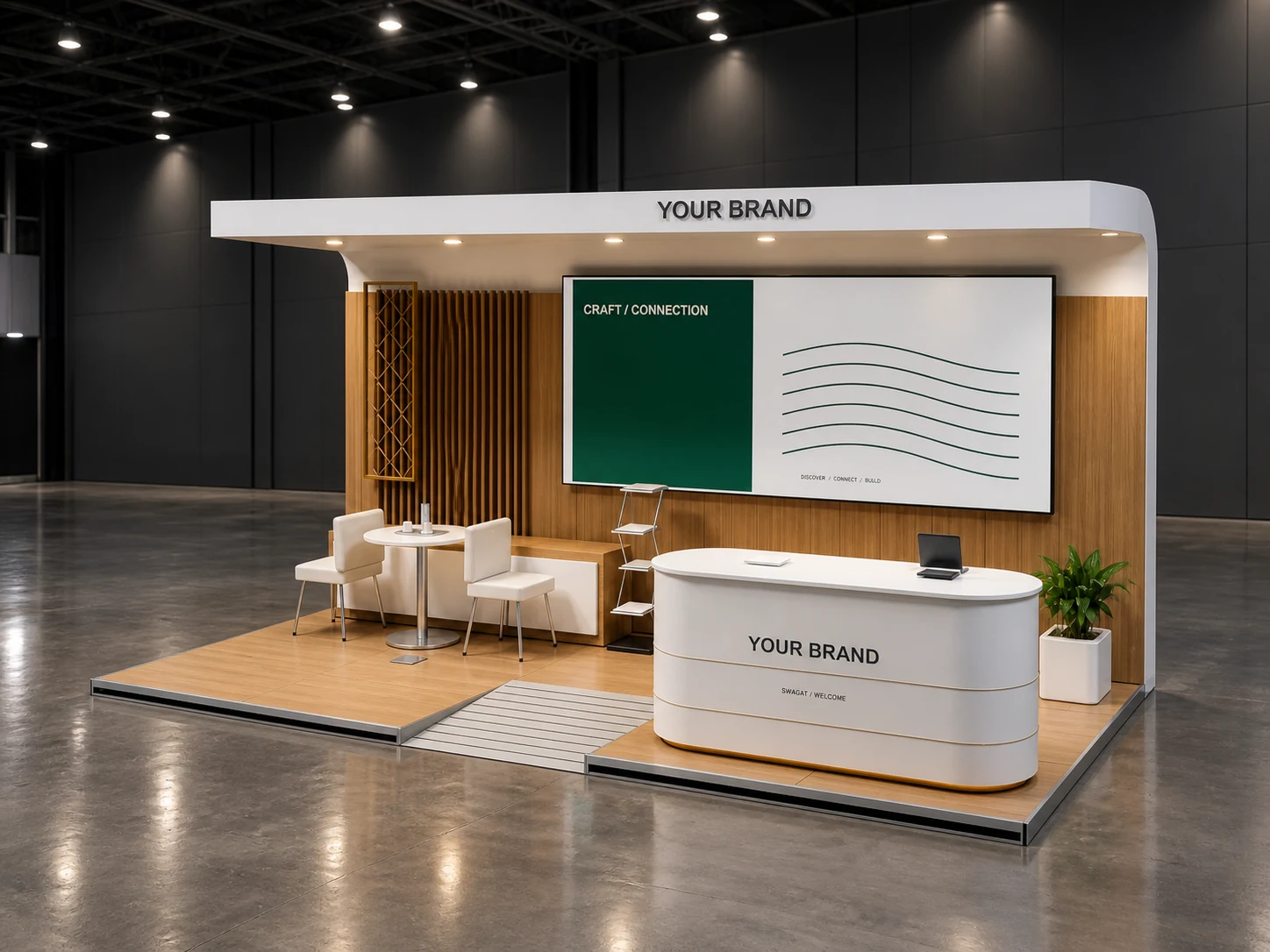
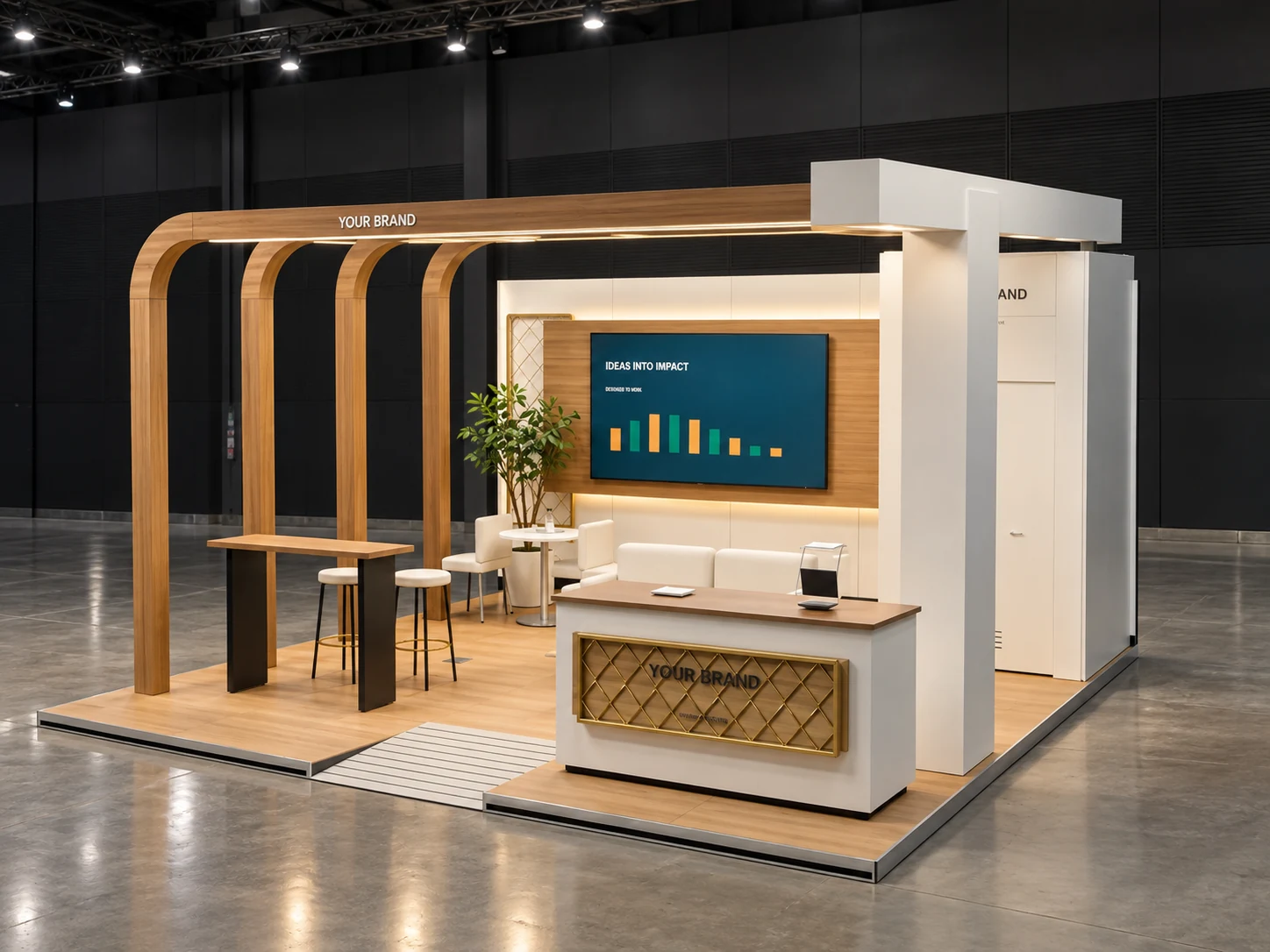
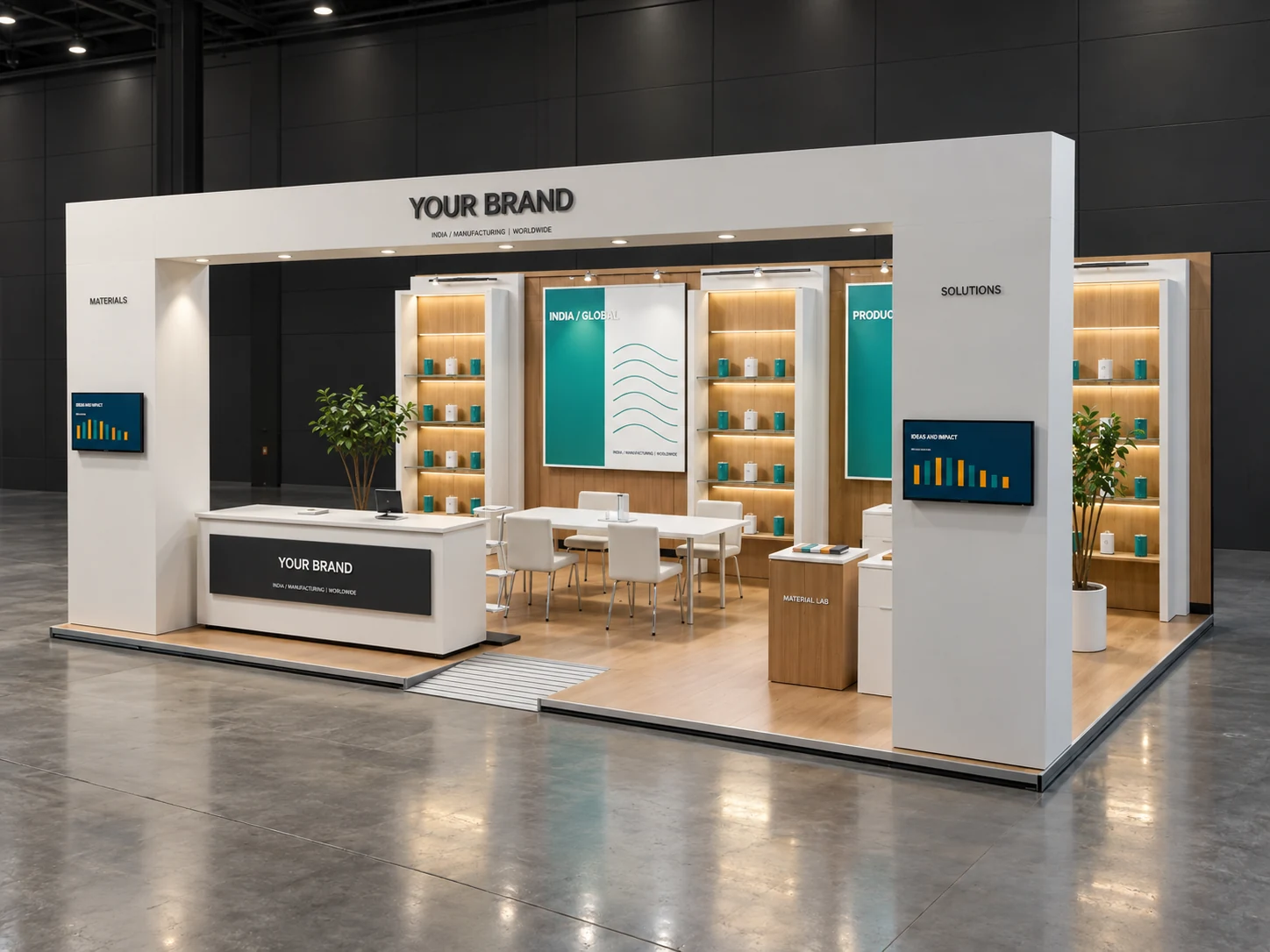
A shell scheme usually starts with an organiser-provided booth package. A custom stall starts with a design developed around the allocated space and your brief. The useful choice depends on your display needs, visitor experience, budget and the responsibilities included in each option.
01
Check what the organiser package actually includes
Shell scheme packages vary. Read the booking specification for the supplied structure, wall panels, fascia, floor finish, lighting, furniture and electrical services. Do not assume that an item from a previous event is included again. Ask how graphics can be attached, what can be changed and which suppliers or services must be booked through the organiser.
A straightforward product display and a few short conversations may fit the supplied layout well. Custom graphics, display fixtures and considered furniture can improve that experience when the package permits them. Check the dimensions and installation requirements of additions so that a last-minute upgrade does not depend on an unapproved modification.
| Consideration | Shell scheme | Custom stall |
|---|---|---|
| Starting point | Confirm the organiser’s supplied booth specification. | Develop the layout and build specification from the brief. |
| Layout & branding | Work within the package and permitted modifications. | More design options, subject to event approval. |
| Product display | Check supplied dimensions against display requirements. | Plan fixtures and demonstrations around the products. |
| Coordination | Clarify package services and any additional suppliers. | Coordinate design, production, permissions and installation scope. |
02
Match design control to the activity inside
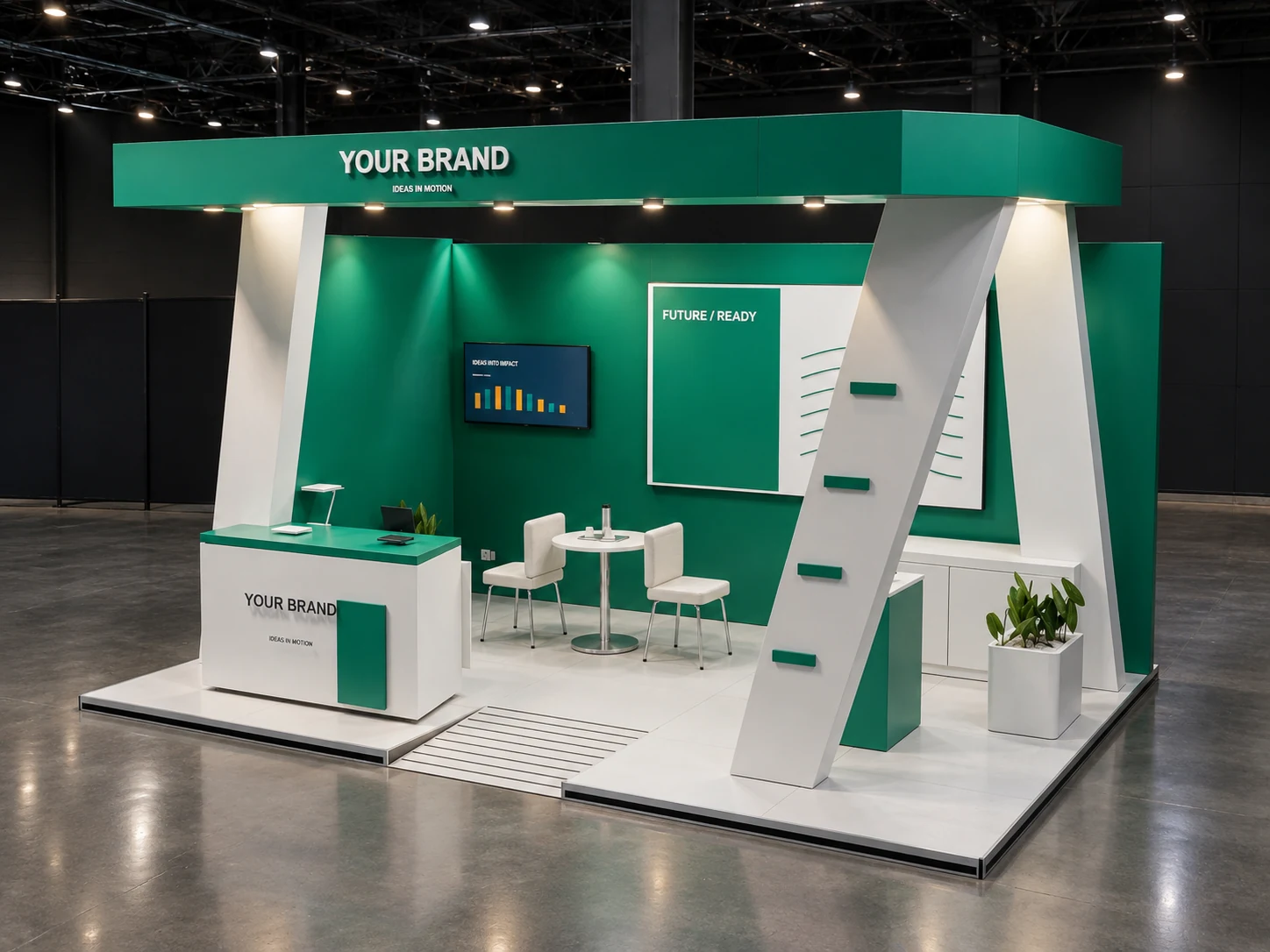
A custom approach becomes useful when the exhibition needs a specific product presentation, several visitor zones, a distinctive brand environment or an equipment demonstration that the standard package cannot accommodate. That flexibility still has constraints: the allocated footprint, open sides, event manual, approvals and installation programme remain part of the brief.
Avoid choosing custom solely because it looks more elaborate. Ask what the added structure does for the visitor and for your team. A clear product story, accessible entrance and useful conversation area may matter more than a large decorative feature. Conversely, a standard booth can be a poor fit if its arrangement prevents the main product from being demonstrated effectively.
03
Compare the complete scope and future use
Compare total event requirements rather than the initial package price alone. Additional graphics, furniture, displays, equipment, power, transport and installation can change the scope. For a custom proposal, clarify design, fabrication, organiser coordination, handover, support and dismantling. Separate items paid directly to the organiser so that the two options are assessed consistently.
For repeated exhibitions, consider what can travel to the next footprint. Reusable branded fixtures or lightboxes may be useful in either format, provided storage, packing and refurbishment are planned. Share your event calendar and likely space allocations with the designer. The best choice supports this show while making realistic provision for the next one.
Before you begin
Practical questions.
- Is a shell scheme always cheaper than a custom stall?
- Compare the supplied package and all required additions against a fully scoped custom proposal. This guide does not assume a universal price difference.
- Can Lumian help decide between the two formats?
- Share the organiser package, floor plan, products, dates and budget. The team can review the layout needs and propose an appropriate design and build scope.