Planning guide · Budget
What determines the cost of an exhibition stall?
An exhibition stall budget should describe what you are buying, not just the area you have booked. Two designs on the same footprint can carry different production and installation scopes. A useful comparison starts with an agreed brief and a clearly itemised proposal.
01
Understand the main cost decisions
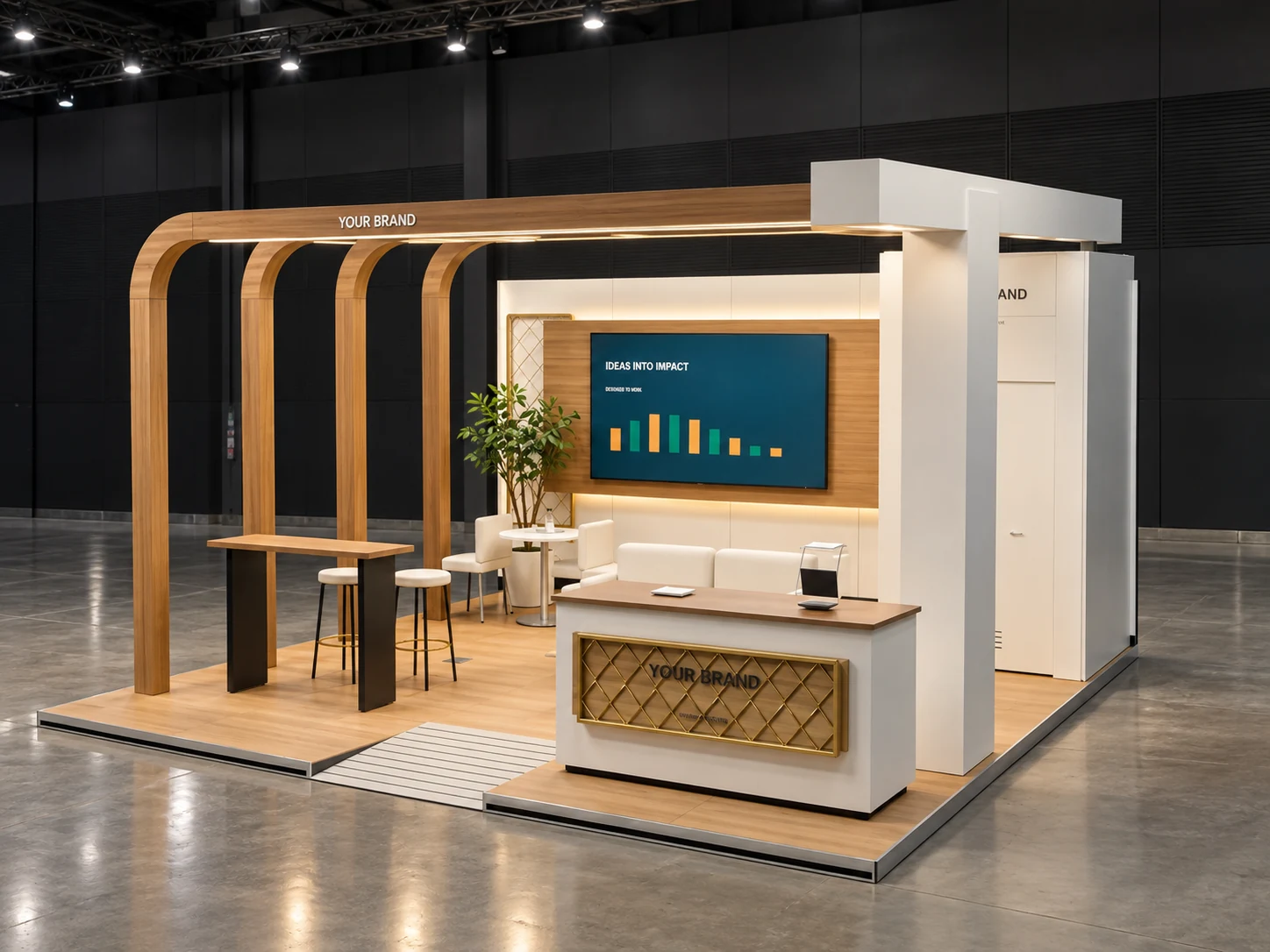
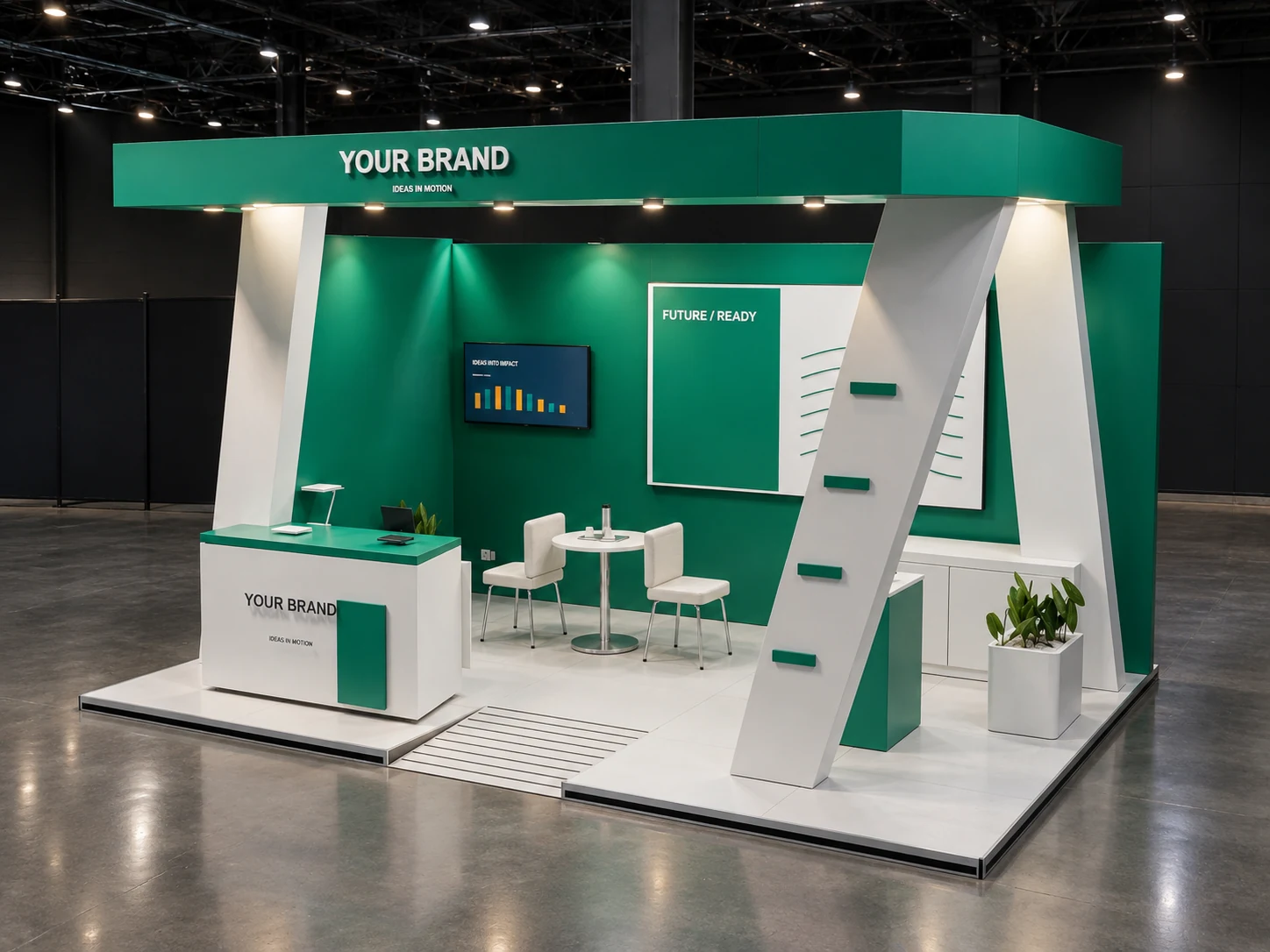
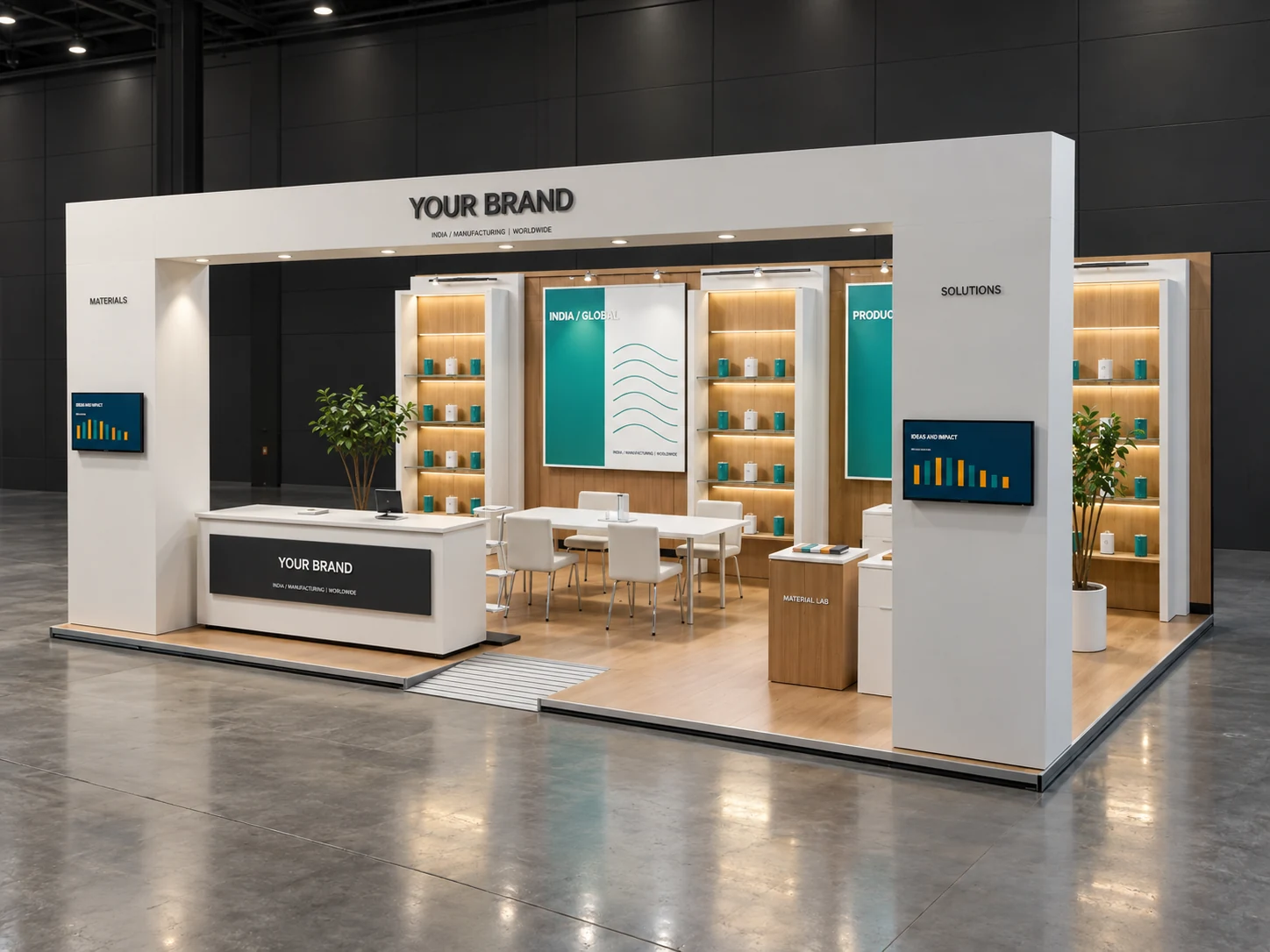
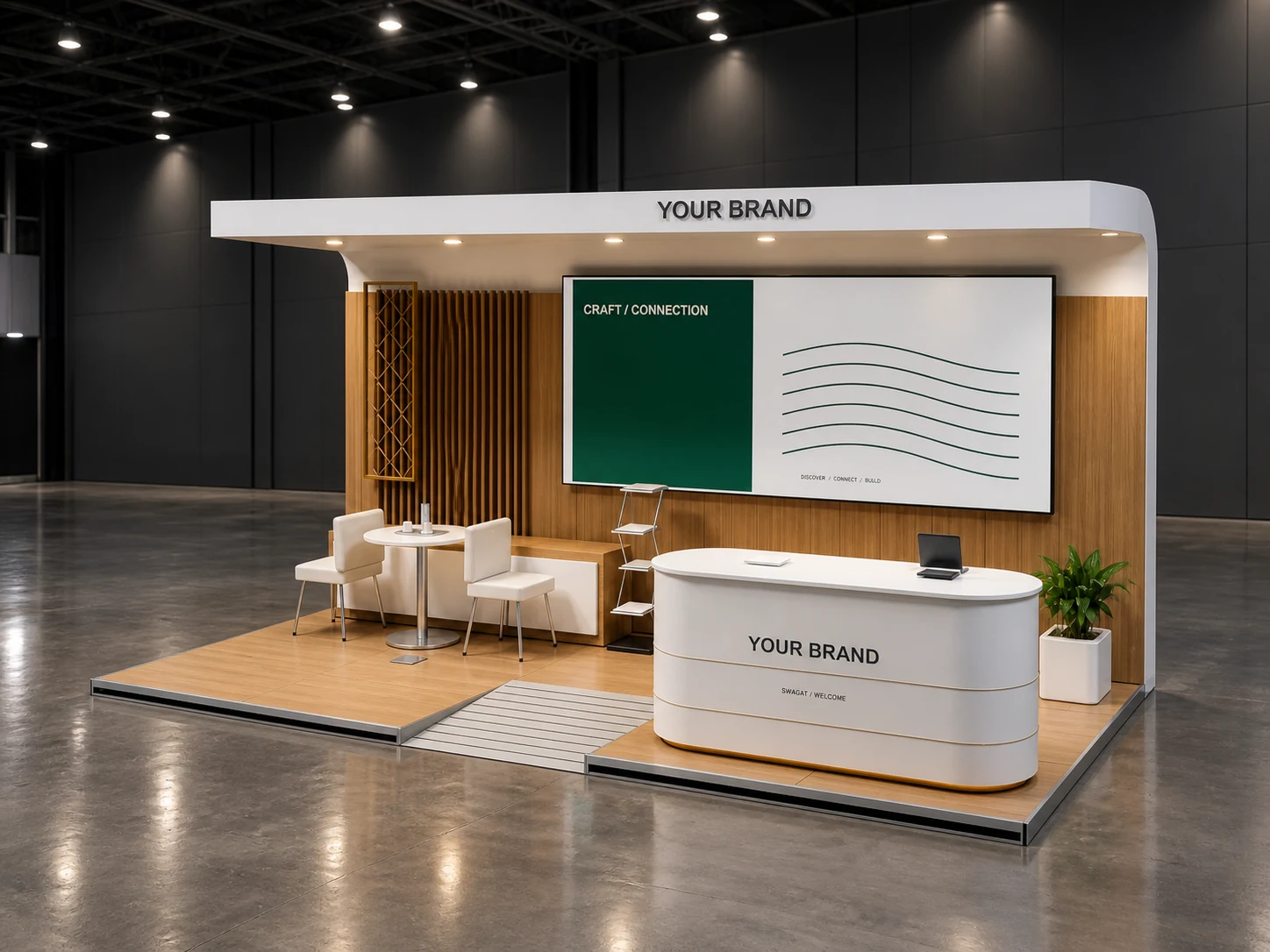
The footprint and number of open sides influence the layout, but structure and finish decisions matter too. A straightforward backdrop with product counters is a different build from a sculptural pavilion with multiple display zones. Materials, joinery, graphics, lighting, furniture and AV each need a defined specification before a quotation can be compared fairly.
The event also affects the scope. Transport, installation access, the available build window, organiser services and dismantling arrangements need to be considered alongside production. Keep exhibition space rental and organiser charges visible in your overall event budget, and confirm whether they are included in the contractor’s proposal or paid separately.
| Decision | What to clarify in the quotation |
|---|---|
| Structure & finishes | Materials, construction detail, finish specification and approved footprint. |
| Graphics & displays | Artwork preparation, print quantities, display fixtures and product handling. |
| Lighting & AV | Equipment, content preparation, power coordination and operating support. |
| Delivery & show site | Transport, installation, venue services, handover and dismantling. |
02
Compare scope before comparing totals
Send the same floor plan and requirements to each supplier. Ask them to state assumptions, exclusions and the status of taxes and event services. Check whether a price includes furniture, screen hire, storage, graphics, on-site support and post-show handling. A lower total is difficult to evaluate when these details are unresolved.
Ask which changes can affect the quote after approval. Additional artwork, a different finish, late product information or a revised layout can create new work. A written revision process helps both sides assess the cost and deadline before authorising a change. Keep one approved version of the scope alongside the final drawings.
03
Protect the objective when adjusting the budget
If the proposal exceeds your budget, identify the visitor experience you need to preserve. Protect clear branding, product visibility and usable conversation space first. Then review structural complexity, finish options, display quantities and AV. Reducing an oversized decorative feature may preserve more of the intended experience than removing practical storage or a necessary demonstration counter.
Discuss reuse when you have a series of exhibitions. A reusable element needs a plan for different footprints, packing, transport, storage and refurbishment. It is not automatically cheaper for every event. Ask for the complete lifecycle scope so that a saving at the second show is not assumed without accounting for those costs.
Before you begin
Practical questions.
- Is there one reliable price per square metre?
- A rate without a defined specification can hide important differences. Lumian quotes against the project brief; this guide does not publish an indicative rate or promise a fixed package price.
- What should we send for a useful estimate?
- Send the show and venue, dates, floor plan, open sides, display requirements, preferred design direction and intended budget. Include the exhibitor manual when available.